

Love and service
His Message
Prema (selfless love) and Seva (selfless service): the remedy for the ills of mankind, and the essence of every religion.
In essence
What is Swami’s message?
The message of Bhagawan Sri Sathya Sai Baba is one of love and service: the five eternal human values of Truth, Righteousness, Peace, Love and Non-violence, which form the essence of all religions. His dictum of the ‘Brotherhood of man and Fatherhood of God’ calls those divided by religion, sect and creed to set aside their differences and walk together.
Source: ssssoindia.org/his-message ↗
The five human values
Sathya, Dharma, Shanti, Prema, Ahimsa
Love is one; it shows itself differently in thought, action, feeling and understanding.
“Love as thought is Sathya, as action it is Dharma, as feeling it is Shanthi and as understanding it is Ahimsa (Non-violence).”
Sathya
Truth
“Truth is unity of thought, word and deed.”
Dharma
Right Conduct
“When action is saturated with Truth, it becomes Dharma (Righteousness).”
Shanti
Peace
“When all actions are right, Peace reigns…”
Prema
Love
“Love is the sustenance for all the four.”
Ahimsa
Non-violence
“…and one’s mind is free from traces of violence.”
All five lines are from the same discourse (1 June 1985). Sathya Sai Speaks, Vol 18 ↗
Two maxims
Love All, Serve All. Help Ever, Hurt Never.
His whole message fits in these two short sentences, and every act of service in the Organisation grows from them.
Love all, serve all
“Love all, serve all. Hating everyone, cavilling at everyone, feeling jealous of everyone, if you want to experience grace, how can you have it?”
— Divine Discourse, Trayee Brindavan, 29 May 1988 (Sathya Sai Speaks, Vol 21) source ↗
Help ever, hurt never
“Help ever, hurt never. Do not cause harm to anyone. If you can help anyone, do so.”
— Kalyana Mandap, Brindavan, 10 May 1992 (Sathya Sai Speaks, Vol 25) source ↗
Ceiling on Desires
Want less, waste nothing
Ceiling on Desires does not mean giving up every desire. It means not wasting food, money, time and energy, so that what is saved can serve others.
“Wherever you look today, there are only desires, desires, and more desires. Put a ceiling on these desires! Only then will your mind become steady.”
- 1.
Food
“Don’t waste food. Food is God.”
- 2.
Money
“Don’t waste money. God is wealth.”
- 3.
Time
“Don’t waste time. Time waste is life waste.”
- 4.
Energy
“Don’t waste energy.”
— Divine Discourse, 24 March 1993. ssssoindia.org ↗
Unity of faiths
Become a better follower of your own faith
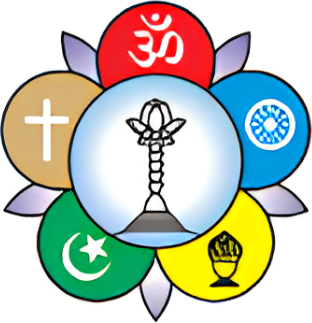
The Sri Sathya Sai Seva Organisation is not a religious or proselytising organisation. No one is asked to follow a particular religion or ritual; each person is inspired to follow their own faith better.
“A Hindu should become a better Hindu, a Christian a better Christian, and a Muslim a better Muslim.”
On the Organisation: ssssoindia.org/about-organisation ↗
21 November 1985
The Ten Principles
In His discourse at the World Conference, Swami gave these ten principles for every member, asking that they be followed with enthusiasm and love, and that each be an example to others wherever they are.
Text as published at ssssoindia.org ↗
- Principle 1:
Love and Serve the Motherland; do not hate or hurt the motherland of others.
- Principle 2:
Honour every religion; each is pathway to the one God.
- Principle 3:
Love all men without distinction; know that mankind is a single community.
- Principle 4:
Keep your home and its environs clean; it will ensure health and happiness for you and for society.
- Principle 5:
Do not throw coins when beggars stretch their hands for alms; help them become self-reliant. Provide food and shelter, love and care, for the sick and the aged.
- Principle 6:
Do not tempt other by offering bribes or demean yourself by accepting bribes.
- Principle 7:
Do not develop jealousy, hatred or envy on any account.
- Principle 8:
Do not depend on other to serve your personal needs; become your own servant, before proceeding to serve others.
- Principle 9:
Adore God. Abhor Sin.
- Principle 10:
Observe the laws, rules and regulations laid down by the State and be ideal citizens.

“A Hindu should become a better Hindu, a Christian a better Christian, and a Muslim a better Muslim.”
Read for yourself
Discourses and writings
Beginning with His first public discourse at Karur on 25 October 1947, thousands of discourses from 1953 to 2010 are recorded in the 42 volumes of ‘Sri Sathya Sai Speaks’. Between 1958 and 1984 Swami wrote the 15 ‘Vahinis’, first published as essays in Sanathana Sarathi.
Living the message, week by week
Bhajans, study circles, Bal Vikas and seva: everyone is welcome at every Samithi in Madhya Pradesh.